 Tiếng Việt
Matching plastic color to a sample is the process of developing a color formulation so that the processed part closely matches an approved reference. It is not simply a matter of “looking at the sample and mixing colors,” because the final appearance is influenced by pigment, base resin, thickness, surface finish, temperature, and the lighting used for evaluation.
Step 1: Define the Real Color Standard
The reference may be a molded plastic part, color plaque, color chip, Pantone/RAL standard, or measured color data. If an approved physical product exists, it should normally be used as the master standard.
Phone photos and screen images are useful only for initial reference because displays, cameras, and ambient lighting can significantly change how a color appears.
Step 2: Collect Material and Process Information
Before developing a formula, identify the resin and production process. A color matched in natural PP should not automatically be assumed to match in ABS or recycled resin.
- Polymer and resin grade.
- Natural color of the resin.
- Injection molding, extrusion, film blowing, or another process.
- Processing temperature.
- Finished-part thickness.
- Glossy, matte, or textured surface.
- Opacity, transparency, or special-effect requirements.
Step 3: Analyze the Color Direction
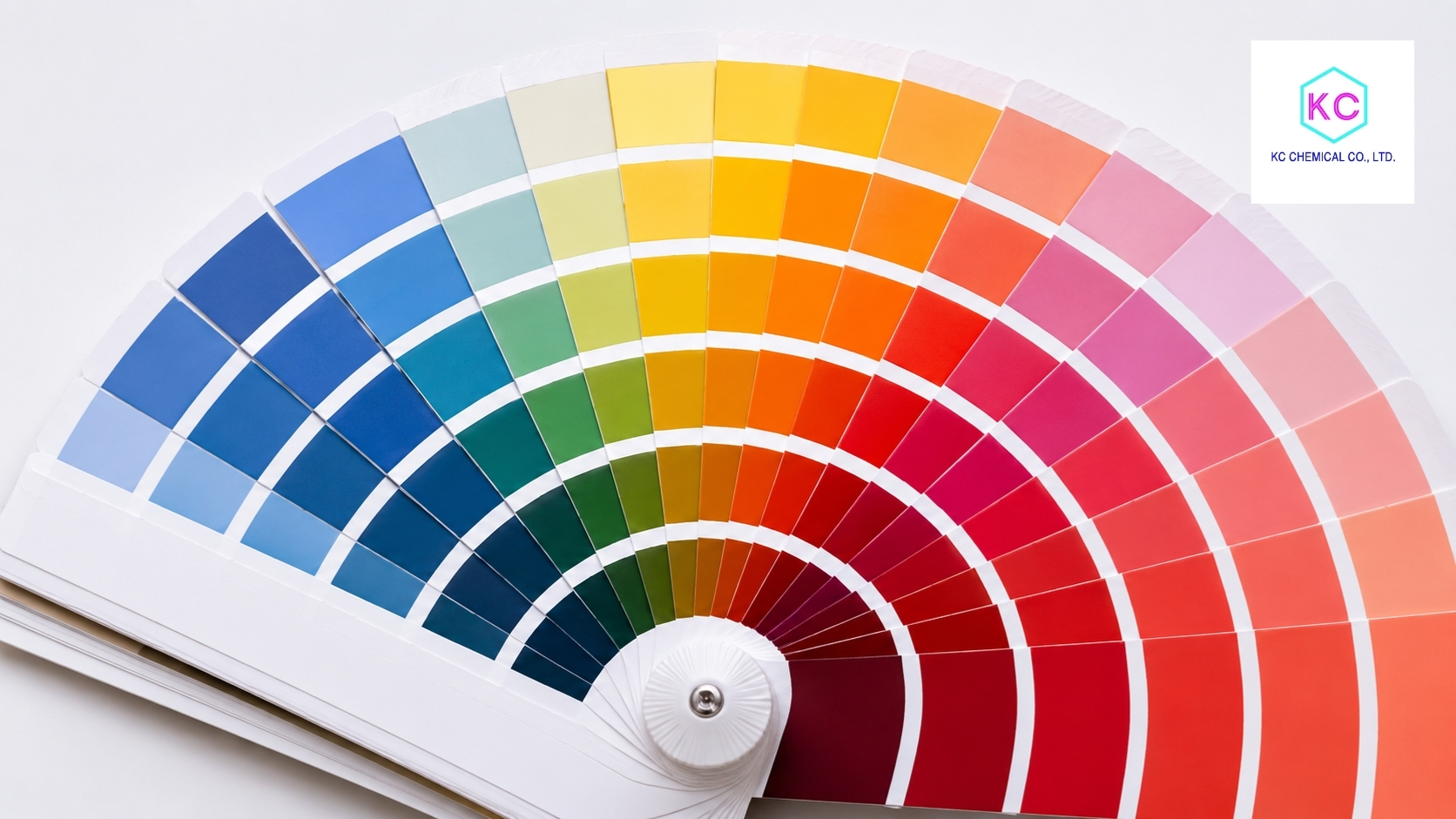
The color matcher needs to identify the undertone of the sample: for example, yellowish red or bluish red, greenish blue or violet blue, warm gray or cool gray. This helps determine which pigment system is most appropriate. Complex colors may require several pigments to achieve the target hue, lightness, and saturation.
Simply adding the “opposite color” to make a correction can dull the shade if the adjustment is not controlled.
Step 4: Prepare a Laboratory Trial
An initial formulation is prepared at small scale and processed in a material as close as possible to the production resin. The trial sample should also represent the actual product thickness and surface. After molding or extrusion, the color is evaluated visually and, when tighter control is required, with a color-measuring instrument.
Step 5: Evaluate Color Visually Under Controlled Conditions
Visual assessment remains important because end users ultimately see the product with their eyes. However, lighting conditions should be controlled. Two samples may match under one light source and differ under another, a phenomenon commonly known as metamerism.
For important projects, the approval light source, viewing position, and sample surface should be defined in advance.
Step 6: Use Instrumental Color Data to Support Decisions
A color instrument can provide color coordinates and difference values such as Delta E. These measurements support more objective comparison between the production sample and the approved standard. However, there is no single Delta E limit that is correct for every product. The acceptable tolerance should be agreed according to the color, material, application, customer requirement, and measurement method.
It is also important that all parties use the same measurement conditions and the same Delta E formula.
Step 7: Adjust the Formula
After the first trial, pigment ratios or pigment combinations are adjusted to move the sample closer to the target. Several iterations may be needed for sensitive colors, colored substrates, or tight tolerances.
Adjustments should be controlled and each formula should be recorded. If too many variables are changed at once, it becomes difficult to determine which change improved or worsened the color.
Step 8: Scale Up From the Lab to Production
A successful laboratory sample does not guarantee an identical result in mass production. Larger machines may have different shear, residence time, temperature, and feeding behavior. A trial on the production machine—or at least on equipment with comparable conditions—is therefore recommended.
If the color shifts during scale-up, process conditions should be checked before making large changes to the color formulation.
Why Does Color Change After Scale-Up?
- The actual masterbatch dosing ratio differs from the approved formula.
- The base resin comes from another lot or has a different natural shade.
- Temperature or residence time is higher than in the laboratory trial.
- The resin has not been dried correctly.
- Residual material from the previous color remains in the machine.
- The finished part has a different thickness or surface gloss than the test plaque.
How Can a Color Formula Be Made More Repeatable?
After approval, record and lock the masterbatch code, material supplier and lot, dosage, resin type, machine settings, approved standard, and measurement data. This creates a “color record” that production and QC can use as a common reference.
For manufacturers with several plants, shared formulas and measurement standards also reduce the risk that each location interprets the target color differently.
What Information Should Be Sent to a Color-Matching Supplier?
A strong request includes the physical color standard, resin type, final application, part thickness, processing technology, special requirements, and expected production volume. If the product is intended for food contact or another regulated application, that information should be stated from the beginning so suitable raw materials can be selected.
Conclusion
The most effective way to match plastic color to a sample is to control the full process from the reference sample through materials, formulation, measurement conditions, and production scale-up. When these variables are documented clearly, manufacturers can reduce the number of color trials and improve repeatability between production lots. KC Chemical can receive physical samples and application information to develop color solutions for a range of polymer systems.
- What Is Color Dispersion In Plastics? Causes, Effects And Improvements | KC Chemical
- Causes Of Color Variation In Plastic Products And How To Control It | KC Chemical
- How To Match Plastic Color To A Sample For Consistent Production | KC Chemical
- How To Control Color Between Plastic Production Batches | KC Chemical
- How To Choose Color Masterbatch For PP, PE, ABS And PET | KC Chemical